Buy zeszytyodnowy.eu ?
We are moving the project
zeszytyodnowy.eu .
Are you interested in purchasing the domain
zeszytyodnowy.eu ?
domain@kv-gmbh.de · 0541-91531010
Buy zeszytyodnowy.eu ?
Is Talos a god?
Talos is a figure from Greek mythology who was a giant automaton made of bronze. In the mythology, he was created by the god Hephaestus and was tasked with protecting the island of Crete. While Talos is a significant figure in Greek mythology, he is not considered a god in the traditional sense. Instead, he is often seen as a mythical creature or a guardian figure. **
What is the principle of this decimal number 2?
The principle of the decimal number 2 is that it represents the quantity of two units. In the decimal system, each place value represents a power of 10, so the digit 2 in the ones place indicates that there are two single units. This principle is fundamental to understanding the decimal system and how numbers are represented and manipulated in mathematics. **


Similar search terms for The-Talos-Principle-2
Top-Angebote
Products related to The-Talos-Principle-2:
-
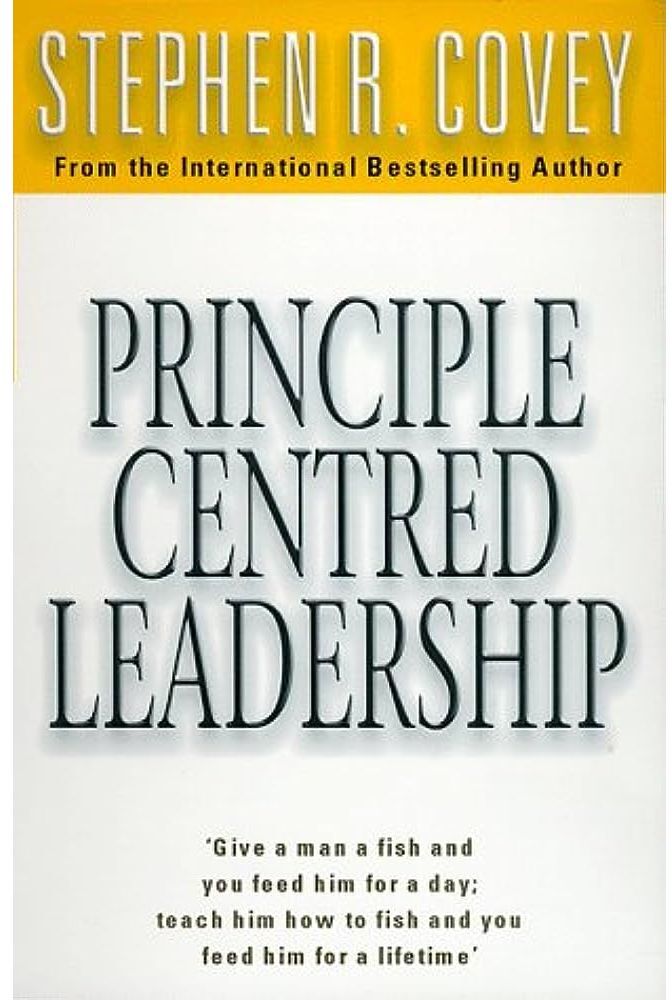
Simon & Schuster Principle Centred Leadership by Stephen R CoveyPRINCIPLE CENTRED LEADERSHIP will help solve these dilemmas - and many others:* how do we achieve a wise and renewing balance between work and family in the midst of constant pressures and crises?* how do we unleash the creativity, talent and energy of the vast majority of the work force, whose jobs neither require nor reward such resources?* how can we have a culture characterised by change, flexibility and continuous improvement and still maintain a sense of stability and security?* how do we create team spirit and harmony among people and departments that have been criticising and attacking each other for years?* how do we get people and culture aligned with strategy, so that everyone in an organisation is as committed to the strategy as those who formulated it?6,99 £*Shipping: 2,99 £Secure redirect to the provider
-
Nicholas Brealey Publishing The 80/20 Principle, Atomic Habits, How to Talk to Anyone Collection 3 Books Set by Richard Koch, James Clear, Leil LowndesThe 80/20 Principle The unspoken corollary to the 80/20 principle is that little of what you spend your time on actually counts. But by concentrating on those things that do, you can unlock the enormous potential of the magic 20 percent. Discover how to identify the few methods that will lead to great results, and use them alone. Avoid hard work. Don't push water uphill. Be very selective in what you do. Have a great life. Atomic Habits People think that when you want to change your life, you need to think big. But world-renowned habits expert James Clear has discovered another way. He knows that real change comes from the compound effect of hundreds of small decisions: doing two push-ups a day, waking up five minutes early, or holding a single short phone call. He calls them atomic habits. In this ground-breaking book, Clears reveals exactly how these minuscule changes can grow into such life-altering outcomes. How to Talk to Anyone Never be at a loss for words again! Perfect your people skills with his fun, witty and informative guide, containing 92 little tricks to create big success in personal and business relationships. In How To Talk To Anyone, bestselling relationships author and internationally renowned life coach Leil Lowndes reveals the secrets and psychology behind successful communication16,50 £*Shipping: 2,99 £Secure redirect to the provider
-
Piatkus Campus Diaries Series By Elle Kennedy 2 Books Set (The Dixon Rule & The Graham Effect)Elle Kennedy Collection 2 Books Set (The Dixon Rule & The Graham Effect): The Dixon Rule: Diana Dixon has a lot going on this summer. She's rehearsing for a ballroom dance competition, juggling two jobs, and dealing with an ex-boyfriend who can't take the hint it's over. Yet despite all that, she still has plenty of time and energy to tell Shane Lindley to screw off.Shane just moved into her apartment building and seems dedicated to sleeping his way through her entire cheerleading squad. Sure, he's a tall, gorgeous hockey player, but he's messing with her turf. This calls for some ground rules: no parties in her apartment, leave her teammates alone, and - most importantly - leave her alone. The Graham Effect: Gigi Graham has exactly three goals: qualify for the women's national hockey team, win Olympic gold, and step out of her famous father's shadow. So far, so good, except for two little things. Fine - a little thing and a big, grumpy thing. She needs to improve her game behind the net, and she needs help from Luke Ryder.Ryder is six-foot five, built, opinionated, rude . . . and sexy as hell. But he's still the enemy.Briar's new hockey co-captain has his reasons, though. The men's team just merged with a rival program, leaving Ryder with an angry roster where everyone hates one another's guts. To make matters worse, the summer coaching spot he's angling for with the legendary Garrett Graham is out of reach after he makes the worst possible first impression on his hero. So, really, this compromise with Gigi is win-win.15,99 £*Shipping: 2,99 £Secure redirect to the provider
-
Branches Readers Continue the Series: Owl Diaries #2-14 (paperback) - by Rebecca ElliottContinue the Series!If you've read the first book and enjoyed it, now you can continue where you left off with this favorite series.Part of Scholastic's early chapter book line Branches, aimed at newly independent readers. With easy to read text,...59,97 $*Shipping: 0,00 $Secure redirect to the provider


-
What is the economic principle: the principle of minimum or the principle of maximum?
The principle of minimum and the principle of maximum are economic principles that relate to decision-making. The principle of minimum states that individuals or firms will seek to minimize their costs or inputs in order to achieve a certain level of output or outcome. On the other hand, the principle of maximum states that individuals or firms will seek to maximize their benefits or outputs given a certain level of inputs or costs. Both principles are important in guiding economic decision-making and resource allocation. **
-
What is the principle of the key-lock principle?
The key-lock principle is based on the idea that certain molecules or structures (keys) can fit into specific receptors or binding sites (locks) with high specificity and affinity. This principle is commonly used to describe the interaction between enzymes and their substrates, where the enzyme (lock) has a specific active site that perfectly fits the substrate (key), allowing for efficient catalysis. The key-lock principle highlights the importance of complementary shapes and chemical properties between molecules for effective interactions to occur. **
-
What is the ping-pong principle or the hourglass principle?
The ping-pong principle, also known as the hourglass principle, is a communication strategy where information is exchanged back and forth between two parties in a structured and concise manner. It involves each party taking turns to speak or provide input, similar to a game of ping-pong. This principle ensures that communication is balanced, effective, and allows for active listening and engagement from both parties. It helps to maintain a focused and productive conversation by preventing one party from dominating the discussion. **
-
What is the rocket principle and the principle of recoil?
The rocket principle states that for every action, there is an equal and opposite reaction. This means that when a rocket expels gas out of its engines, the force of the gas pushing out is matched by an equal force pushing the rocket in the opposite direction. The principle of recoil is similar, stating that when a gun is fired, the force of the bullet being expelled from the barrel is matched by an equal force pushing the gun in the opposite direction. Both principles are based on Newton's third law of motion, which describes the relationship between the forces acting on two interacting objects. **


What are the principle of operation and the principle of object?
The principle of operation refers to the fundamental method or process by which something functions or operates. It outlines the underlying rules or guidelines that govern how a system or device works. On the other hand, the principle of object pertains to the main focus or purpose of a particular entity or concept. It defines the central idea or goal that the object is designed to achieve or represent. Both principles are essential in understanding the functionality and significance of a system or object. **
Does the principle of solidarity correspond to the principle of equivalence?
The principle of solidarity and the principle of equivalence are related but not the same. The principle of solidarity emphasizes mutual support and collective responsibility within a community, while the principle of equivalence focuses on equal treatment and fairness. Solidarity often involves individuals or groups providing assistance or resources to those in need, even if they have not contributed equally, whereas equivalence typically requires treating individuals or groups in the same way based on certain criteria. Both principles aim to promote fairness and justice, but they operate in slightly different ways. **
Top-Angebote
Products related to The-Talos-Principle-2:
-
The Talos Principle 2 Steam CD KeyThe Talos Principle 2: Official Global PC Steam CD Key The Talos Principle 2 is a thought-provoking first-person puzzle adventure game developed by Croteam and published by Devolver Digital. It was released on November 2, 2023 , for PC (Windows) Set hundreds of years after its critically acclaimed predecessor, The Talos Principle , this sequel plunges players into a new world where biological humanity is extinct. In its place, a utopian civilization of sentient robots flourishes, dedicated to preserving human culture and avoiding the mistakes of their vanished creators. You awaken as the 1000th—and supposedly final—robot born into this society. However, your arrival triggers unforeseen events. A mysterious megastructure, hiding immense power and secrets, beckons a small expedition from your robot society to a distant, enigmatic island. You become part of this expedition, tasked with exploring the island's vast landscapes, solving intricate puzzles, and uncovering the truth behind this new, compelling mystery. As you delve deeper, you're confronted with profound philosophical questions about the nature of consciousness, the purpose of civilization, the pursuit of progress, and the potential pitfalls of repeating humanity's past. Key Features: A New Generation of Puzzles: The game builds upon the original's acclaimed puzzle design with a wide array of new challenges. These include clever metapuzzles and highly demanding "Gold puzzles" for those seeking ultimate mastery. New mechanics such as gravity manipulation, mind transference, and complex laser beam interactions join familiar elements, creating a fresh yet distinctly Talos Principle experience. A Philosophical Odyssey: The narrative is a central pillar, offering a deeply thought-provoking, character-driven story penned by returning writers Jonas Kyratzes and Tom Jubert, joined by Verena Kyratzes. Through your interactions with companion robots, dialogue choices, and discovery of lore, you'll engage with complex ideas on societal growth, the ethics of ambition, and the very meaning of existence, leading to multiple possible endings. Brave New World to Explore: Venture through over a dozen expansive, all-new environments. From the bustling, utopian city of New Jerusalem to the varied and stunning landscapes of the mysterious island—featuring lush forests, arid deserts, and towering mountains—each area offers both beauty and secrets. Players can explore these semi-open environments, discovering long-buried historical fragments and hidden puzzles. Compelling Characters and Story: Interact with a diverse cast of robot companions, each with their own personalities, viewpoints, and backstories. Their philosophical debates and personal relationships add depth and humanity (despite their synthetic nature) to the overarching narrative. Stunning Visuals and Sound: Powered by Unreal Engine 5, the game delivers breathtaking environments and intricate designs. The immersive experience is completed by a ric…7,11 £*Shipping: 0,00 £Secure redirect to the provider
-
John Murray The 80/20 Principle : The Secret of Achieving More with Less: by Richard KochREAD THIS BOOK AND USE IT - TIM FERRISS Twenty years after its first publication, The 80/20 Principle is a global bestseller read by millions of highly effective people around the world. Now, it is more powerful and essential than ever. In the past, the principle gave those who used it a serious advantage.In the future, it will be the essential tool for anyone who wants to succeed. And it is powerful. Based on the counter-intuitive but widespread fact that 80% of results flow from 20% of causes, The 80/20 Principle shows how you can achieve much more with much less effort, time and resources, simply by concentrating on the all-important 20%.This major new edition includes four brand new chapters showing how to: Use the rise of networks to your advantage Benefit from more acute 90/10 and 99/1 forms of the principle Tap into your subconscious to exert a super-potent and amazingly favourable influence on your life Enjoy greater success with 5 mega rules to live by5,95 £*Shipping: 2,99 £Secure redirect to the provider
-
Simon & Schuster Principle Centred Leadership by Stephen R CoveyPRINCIPLE CENTRED LEADERSHIP will help solve these dilemmas - and many others:* how do we achieve a wise and renewing balance between work and family in the midst of constant pressures and crises?* how do we unleash the creativity, talent and energy of the vast majority of the work force, whose jobs neither require nor reward such resources?* how can we have a culture characterised by change, flexibility and continuous improvement and still maintain a sense of stability and security?* how do we create team spirit and harmony among people and departments that have been criticising and attacking each other for years?* how do we get people and culture aligned with strategy, so that everyone in an organisation is as committed to the strategy as those who formulated it?6,99 £*Shipping: 2,99 £Secure redirect to the provider
-
Nicholas Brealey Publishing The 80/20 Principle, Atomic Habits, How to Talk to Anyone Collection 3 Books Set by Richard Koch, James Clear, Leil LowndesThe 80/20 Principle The unspoken corollary to the 80/20 principle is that little of what you spend your time on actually counts. But by concentrating on those things that do, you can unlock the enormous potential of the magic 20 percent. Discover how to identify the few methods that will lead to great results, and use them alone. Avoid hard work. Don't push water uphill. Be very selective in what you do. Have a great life. Atomic Habits People think that when you want to change your life, you need to think big. But world-renowned habits expert James Clear has discovered another way. He knows that real change comes from the compound effect of hundreds of small decisions: doing two push-ups a day, waking up five minutes early, or holding a single short phone call. He calls them atomic habits. In this ground-breaking book, Clears reveals exactly how these minuscule changes can grow into such life-altering outcomes. How to Talk to Anyone Never be at a loss for words again! Perfect your people skills with his fun, witty and informative guide, containing 92 little tricks to create big success in personal and business relationships. In How To Talk To Anyone, bestselling relationships author and internationally renowned life coach Leil Lowndes reveals the secrets and psychology behind successful communication16,50 £*Shipping: 2,99 £Secure redirect to the provider
-
Is Talos a god?
Talos is a figure from Greek mythology who was a giant automaton made of bronze. In the mythology, he was created by the god Hephaestus and was tasked with protecting the island of Crete. While Talos is a significant figure in Greek mythology, he is not considered a god in the traditional sense. Instead, he is often seen as a mythical creature or a guardian figure. **
-
What is the principle of this decimal number 2?
The principle of the decimal number 2 is that it represents the quantity of two units. In the decimal system, each place value represents a power of 10, so the digit 2 in the ones place indicates that there are two single units. This principle is fundamental to understanding the decimal system and how numbers are represented and manipulated in mathematics. **
-
What is the economic principle: the principle of minimum or the principle of maximum?
The principle of minimum and the principle of maximum are economic principles that relate to decision-making. The principle of minimum states that individuals or firms will seek to minimize their costs or inputs in order to achieve a certain level of output or outcome. On the other hand, the principle of maximum states that individuals or firms will seek to maximize their benefits or outputs given a certain level of inputs or costs. Both principles are important in guiding economic decision-making and resource allocation. **
-
What is the principle of the key-lock principle?
The key-lock principle is based on the idea that certain molecules or structures (keys) can fit into specific receptors or binding sites (locks) with high specificity and affinity. This principle is commonly used to describe the interaction between enzymes and their substrates, where the enzyme (lock) has a specific active site that perfectly fits the substrate (key), allowing for efficient catalysis. The key-lock principle highlights the importance of complementary shapes and chemical properties between molecules for effective interactions to occur. **
Similar search terms for The-Talos-Principle-2
-
Piatkus Campus Diaries Series By Elle Kennedy 2 Books Set (The Dixon Rule & The Graham Effect)Elle Kennedy Collection 2 Books Set (The Dixon Rule & The Graham Effect): The Dixon Rule: Diana Dixon has a lot going on this summer. She's rehearsing for a ballroom dance competition, juggling two jobs, and dealing with an ex-boyfriend who can't take the hint it's over. Yet despite all that, she still has plenty of time and energy to tell Shane Lindley to screw off.Shane just moved into her apartment building and seems dedicated to sleeping his way through her entire cheerleading squad. Sure, he's a tall, gorgeous hockey player, but he's messing with her turf. This calls for some ground rules: no parties in her apartment, leave her teammates alone, and - most importantly - leave her alone. The Graham Effect: Gigi Graham has exactly three goals: qualify for the women's national hockey team, win Olympic gold, and step out of her famous father's shadow. So far, so good, except for two little things. Fine - a little thing and a big, grumpy thing. She needs to improve her game behind the net, and she needs help from Luke Ryder.Ryder is six-foot five, built, opinionated, rude . . . and sexy as hell. But he's still the enemy.Briar's new hockey co-captain has his reasons, though. The men's team just merged with a rival program, leaving Ryder with an angry roster where everyone hates one another's guts. To make matters worse, the summer coaching spot he's angling for with the legendary Garrett Graham is out of reach after he makes the worst possible first impression on his hero. So, really, this compromise with Gigi is win-win.15,99 £*Shipping: 2,99 £Secure redirect to the provider
-
Branches Readers Continue the Series: Owl Diaries #2-14 (paperback) - by Rebecca ElliottContinue the Series!If you've read the first book and enjoyed it, now you can continue where you left off with this favorite series.Part of Scholastic's early chapter book line Branches, aimed at newly independent readers. With easy to read text,...59,97 $*Shipping: 0,00 $Secure redirect to the provider
-
Marjan Kamali Collection (The Stationery Shop of Tehran & The Lion Women of Tehran) 2 Books Set - Fiction - Paperback Simon & SchusterTitles in this Set: 1. The Stationery Shop of Tehran 2. The Lion Women of Tehran Description: The Stationery Shop of Tehran 1953, Tehran. In a small shop in a country on the brink of unrest, two people meet for the very first time. Roya loves nothing better than to while away the hours in the stationery shop run by Mr Fakhri. The store, stocked with fountain pens, shiny ink bottles, and thick wads of writing paper, also carries translations of literature from all over the world. Bahman, with his burning passion for justice, is like no one else she has ever met. But all around them, as their relationship blossoms, life in Tehran is changing. Suddenly, shockingly, violence erupts: a coup d'etat that forever changes their country's future, as well as their own. The Lion Women of Tehran In 1950s Tehran, seven-year-old Ellie lives in grand comfort until the untimely death of her father, forcing Ellie and her mother to move to a tiny home downtown. Lonely and bearing the brunt of her mother’s endless grievances, Ellie dreams of a friend to alleviate her isolation. Luckily, on the first day of school, she meets Homa, a kind, passionate girl with a brave and irrepressible spirit. Together, the two girls play games, learn to cook in the stone kitchen of Homa’s warm home, wander through the colorful stalls of the Grand Bazaar, and share their ambitions for becoming 'lion women.' But their happiness is disrupted when Ellie and her mother are afforded the opportunity to return to their previous bourgeois life. Now a popular student at the best girls’ high school in Iran, Ellie’s memories of Homa begin to fade. Years later, however, her sudden reappearance in Ellie’s privileged world alters the course of both of their lives. Together, the two young women come of age and pursue their own goals for meaningful futures. But as the political turmoil in Iran builds to a breaking point, one earth-shattering betrayal will have enormous consequences.14,99 £*Shipping: 2,99 £Secure redirect to the provider
-
Inspired Finds Cat Pattern Multifunctional Bookmark Ruler For Planners Cat Pattern Multifunctional Bookmark Ruler For PlannersAdd a touch of personality to your planning and notetaking with this cat pattern multifunctional bookmark, great for cat lovers and stationery fans alike. Designed to serve as a doublesided bookmark and ruler, it brings both functionality and charm...34,99 $*Shipping: 0,00 $Secure redirect to the provider
-
What is the ping-pong principle or the hourglass principle?
The ping-pong principle, also known as the hourglass principle, is a communication strategy where information is exchanged back and forth between two parties in a structured and concise manner. It involves each party taking turns to speak or provide input, similar to a game of ping-pong. This principle ensures that communication is balanced, effective, and allows for active listening and engagement from both parties. It helps to maintain a focused and productive conversation by preventing one party from dominating the discussion. **
-
What is the rocket principle and the principle of recoil?
The rocket principle states that for every action, there is an equal and opposite reaction. This means that when a rocket expels gas out of its engines, the force of the gas pushing out is matched by an equal force pushing the rocket in the opposite direction. The principle of recoil is similar, stating that when a gun is fired, the force of the bullet being expelled from the barrel is matched by an equal force pushing the gun in the opposite direction. Both principles are based on Newton's third law of motion, which describes the relationship between the forces acting on two interacting objects. **
-
What are the principle of operation and the principle of object?
The principle of operation refers to the fundamental method or process by which something functions or operates. It outlines the underlying rules or guidelines that govern how a system or device works. On the other hand, the principle of object pertains to the main focus or purpose of a particular entity or concept. It defines the central idea or goal that the object is designed to achieve or represent. Both principles are essential in understanding the functionality and significance of a system or object. **
-
Does the principle of solidarity correspond to the principle of equivalence?
The principle of solidarity and the principle of equivalence are related but not the same. The principle of solidarity emphasizes mutual support and collective responsibility within a community, while the principle of equivalence focuses on equal treatment and fairness. Solidarity often involves individuals or groups providing assistance or resources to those in need, even if they have not contributed equally, whereas equivalence typically requires treating individuals or groups in the same way based on certain criteria. Both principles aim to promote fairness and justice, but they operate in slightly different ways. **
* All prices are inclusive of VAT and, if applicable, plus shipping costs. The offer information is based on the details provided by the respective shop and is updated through automated processes. Real-time updates do not occur, so deviations can occur in individual cases. ** Note: Parts of this content were created by AI.